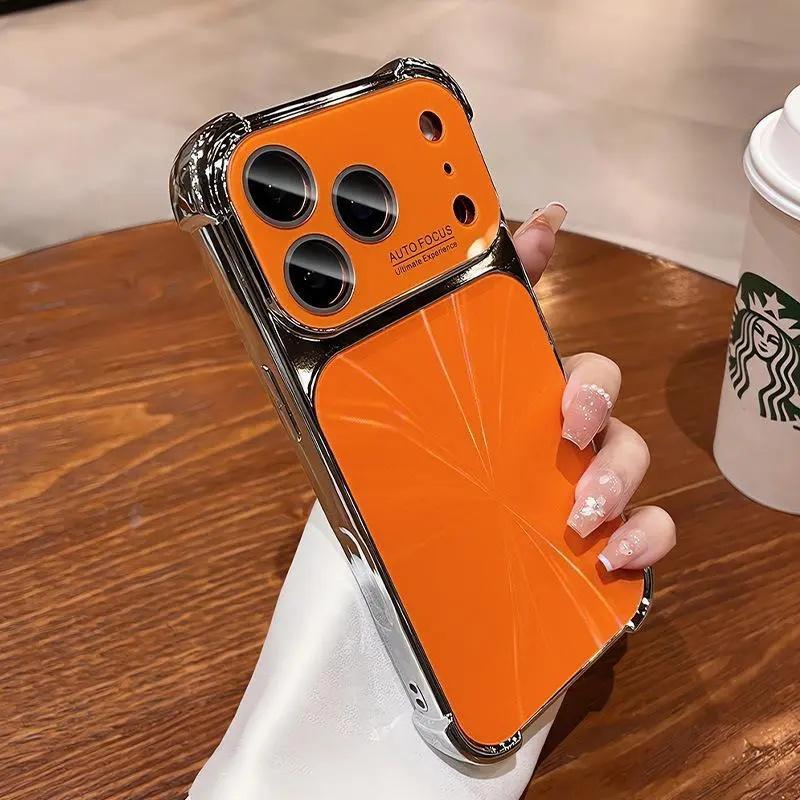
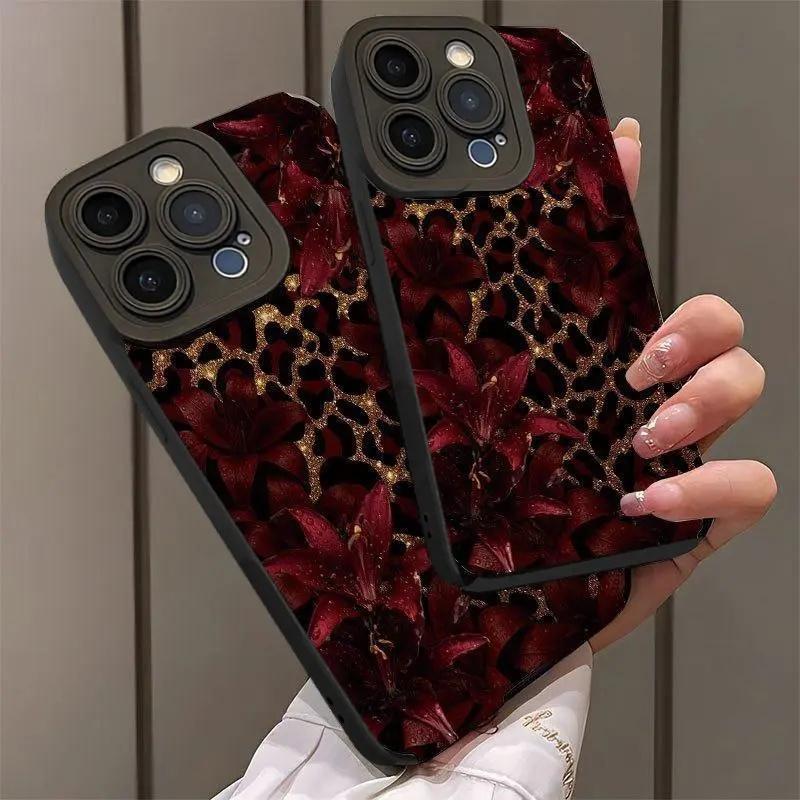
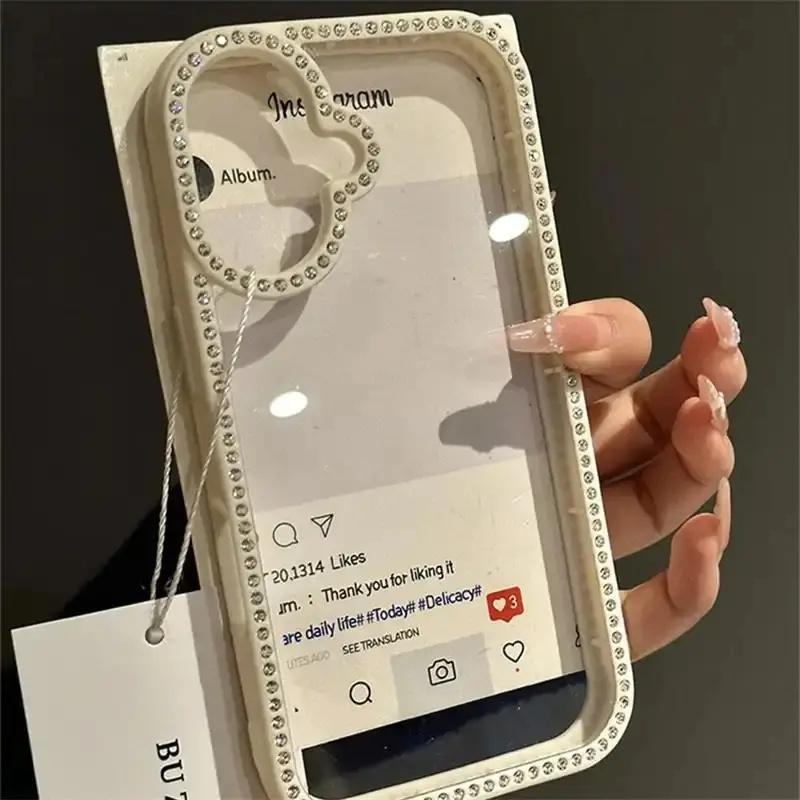
The first photograph contains a hand, a wooden table and a cup beside the case. The second holds two cases across one another in front of a room. The third adds a hangtag and interface-like print behind or through a clear-looking center. Each image contains more than the product. Before naming the design, trace the case edge and ask of every visible mark: inside, outside, or still uncertain?
Use three labels while looking: inside the case boundary, outside the case boundary, or unresolved from this view. The third label prevents photographic staging from becoming an unsupported product claim.
01 — Trace the product silhouette first
Follow the outer perimeter and camera opening before interpreting the scene. A detail that continues beyond that perimeter belongs to the photograph's context, not automatically to the case. A detail contained by the perimeter may belong to the product, but one image can still leave whether it is printed, inserted, reflected or seen through unresolved.
02 — Image one: separate the broad panel from the café scene
The first case is held above a wooden surface beside a takeaway cup. The hand, manicure, sleeve, table and cup sit outside the case boundary and cannot establish an owner, routine, workplace or endorsement. Inside the boundary, the photograph shows one broad orange-looking panel crossed by fine radiating lines, a dark reflective-looking perimeter and a large camera surround. It does not establish exact color, material, finish, grip, fit, camera clearance or protection.
03 — Image two: read two overlapping product rectangles
The second photograph contains two cases, one crossing in front of the other, with a hand and interior background behind them. Petal-like forms and a spotted network remain inside both case silhouettes, while the fingers and room do not. The overlap supports a comparison of repeated placement across two supplied views; it does not prove color accuracy, print depth, texture, material, manufacturing consistency or how either case looks with clothing.
04 — Image three: leave the center unresolved
Small point-like details follow the visible perimeter and camera ring of the third case. A string and hanging tag cross outside it. Interface-like text and icons appear behind or through the clear-looking center, but the single packaged view does not establish whether that graphic is an insert, backdrop, reflection or case artwork. State that uncertainty instead of converting the scene into a product feature.
05 — Keep only observations that survive without the scene
After removing the hand, props, room and packaging mentally, retain only the visible structure supported by the product boundary: a broad central field with radiating lines, a layered petal-and-spot repeat, and point-like perimeter detail around a clear-looking center. End with the three-part reading rule—trace the edge, mark the context, leave unresolved layers unresolved—rather than a styling prescription or shopping prompt.
Trace the edge, mark the context, leave uncertain layers unresolved
A hand or prop can shape the photograph without belonging to the case. A mark inside the silhouette may still need another verified view before it can be called printed artwork, an insert, a reflection or a transparent layer.
Image note: These are the three exact current catalog photographs discussed. They support observations about visible product boundaries, overlap, staging and unresolved layers in the supplied views—not exact color, material, finish, transparency, texture, print method, fit, grip, camera clearance, charging, protection, durability or manufacturing consistency.
OBJECTS IN THIS STORY