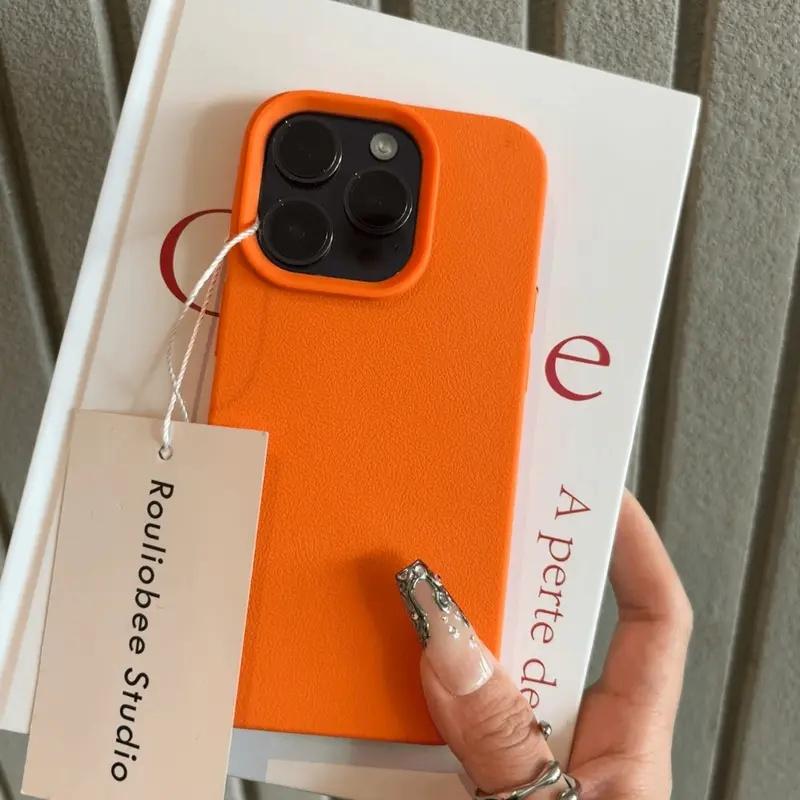
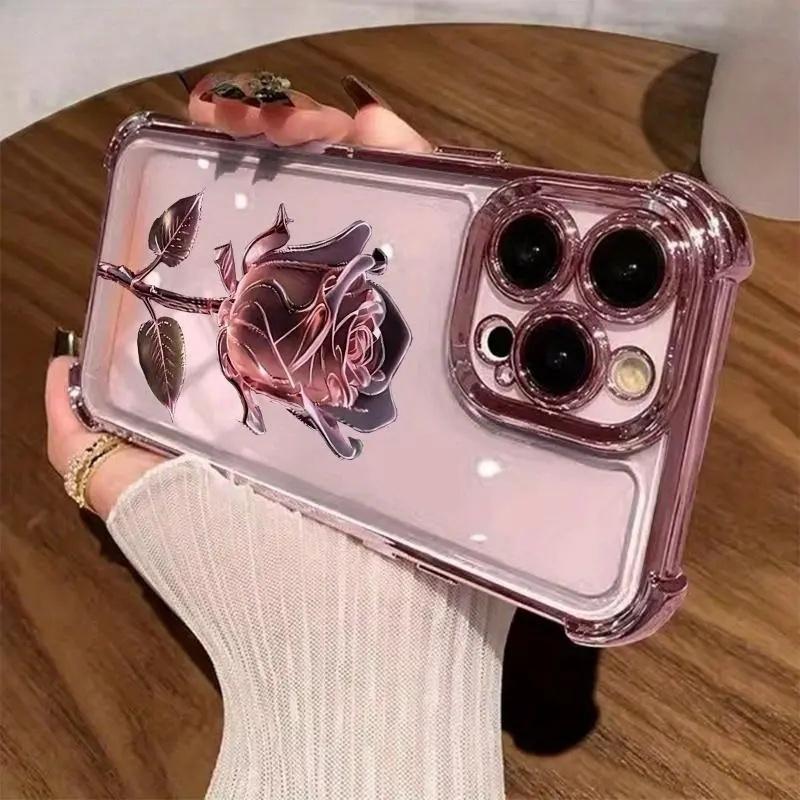
A photograph stops at four edges, but the phone case continues beyond them. The useful reading begins by separating what the image shows clearly from what a hand, tag, sleeve, prop or crop keeps out of view.
A visible edge can be traced. An edge blocked by a hand, tag or prop stays unresolved. A second real view is the honest next step when that missing segment matters.
01 — Draw the photograph's boundary before tracing the case
Treat the image frame as the first limit. Trace only the perimeter that remains visible inside it, then mark each interruption caused by a hand, tag, book, sleeve or crop. Do not connect missing segments by assumption. The result is not a verdict on the product; it is a map of what this photograph can and cannot support.
02 — Orange sample: the top and right edge are clearer than the lower-left
The orange catalog photograph clearly shows the rounded top-right corner, most of the right side and the visible surround around the camera opening. A hanging tag crosses the lower-left area, while a hand and book occupy much of the lower edge. The image supports an outline observation for the exposed sections, but not a complete four-side comparison.
03 — Rose sample: four corner blocks stay visible
The rose catalog photograph shows all four enlarged corner blocks, long runs of the top and lower frame, and a separate ring around the camera area. The phone is held horizontally, so the orientation differs from the orange image. That difference should be named rather than corrected with a synthetic matching view.
04 — Remove the scene that answers a question the photographs did not ask
The catalog photographs already answer the useful question: which perimeter segments are shown and which are interrupted. A generated street, person or outfit cannot reveal the real hidden edge, so no synthetic scene is needed here.
05 — Ask for another real view when the answer depends on depth or use
A back photograph can show exposed outline, corner shape and camera surround. When a decision depends on an unshown side, button, port, interior or measured performance, name the additional real angle or documented specification needed.
Three questions about missing edges
What can one back photograph show about a phone-case frame? It can support observations about perimeter segments, corner shapes and camera surrounds that remain visible inside the image. It cannot supply edges hidden by a hand, tag, prop or crop.
Should I connect a hidden edge by assumption? No. Mark the interruption and leave that segment unresolved. A second real view is more useful than imagining a continuation from the visible sections.
When do I need another product view? Ask for another angle when the question depends on side depth, buttons, ports, interior construction, fit or camera clearance. Performance claims also require documented specifications or tests.
Trace, interrupt, request
Trace. Follow only the perimeter visible inside the photograph.
Interrupt. Mark every point where a hand, tag, prop or crop blocks the edge.
Request. Ask for one additional real angle when the missing segment matters to the decision.
Image note: The two images are current catalog photographs of the exact cases discussed. They support observations about exposed outline, visible corners and camera surrounds in those views. They do not supply hidden edges or establish exact color, material, finish, fit, protection or durability.