
A busy phone-case design can contain words, lines, dots, textures and repeated shapes at once. Reduce the image and those details stop competing equally: one large structure usually remains readable while smaller marks merge into texture.
Use the same supplied image at two display sizes. The smaller view reveals hierarchy; the larger view restores the details that receded.
01 — Use the same image at two sizes
View each current catalog image once at normal article width and once as a small thumbnail. Do not rename the design from memory. At the smaller size, write down only the first word, boundary or repeating structure that remains distinct; then return to the larger image and name the details that had receded.
02 — Large lettering remains before the web
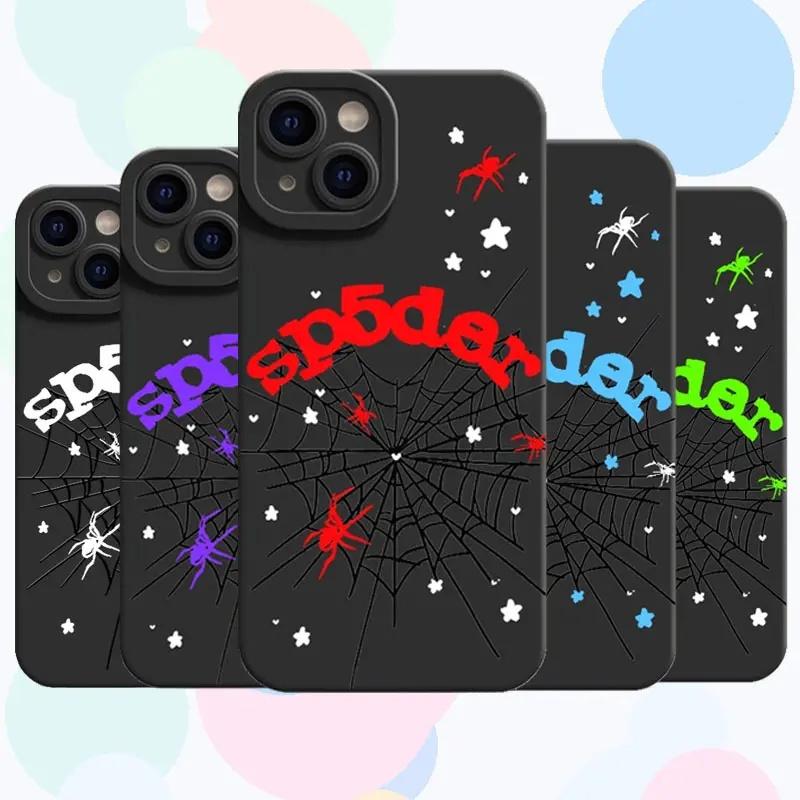
In the central red-accented sample of the spider graphic composite, the curved red lettering occupies more area than the pale web, small stars and spider forms. At thumbnail size, the lettering is the first separable structure; the finer web and scattered marks need the larger catalog image.
03 — A diagonal division remains before lace detail
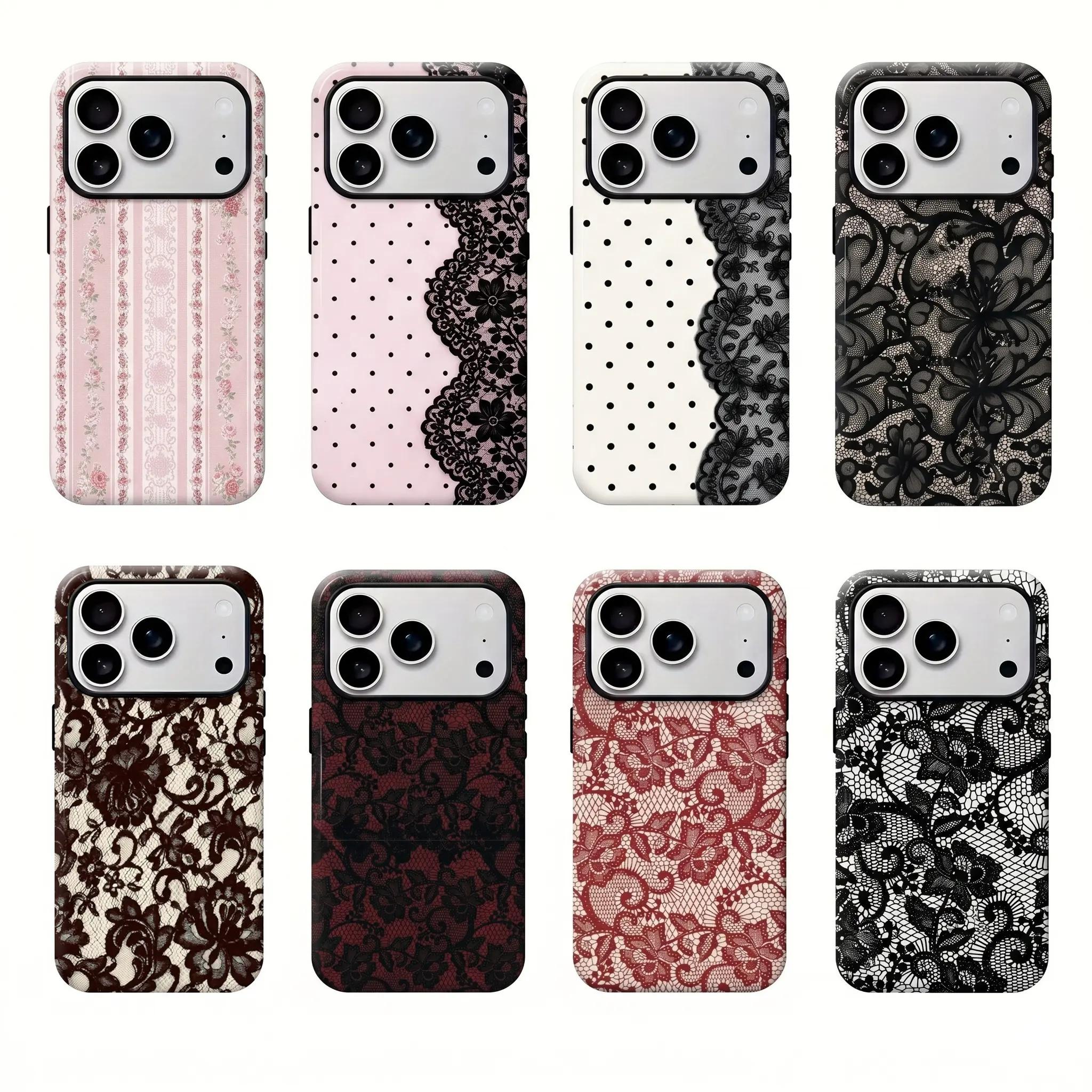
In the pink-and-black sample of the lace composite, a broad diagonal boundary separates the dark panel from the lighter field. That division remains visible when the flowers and dots become too small to describe individually. The composite supports this hierarchy, not an exact color or material claim.
04 — A repeated grid remains before surface effects
The checker case keeps its alternating square structure when reduced, while the tortoiseshell-like and pearly-looking effects inside individual squares become close-view details. The photograph can show this visible order but cannot establish gloss, depth, material or real-world reflectivity.
05 — Keep the result tied to this display test
A thumbnail comparison describes what remains separable in these supplied images at a smaller display size. It does not predict every photograph, room, screen, viewing distance or lighting condition. Use it to name visual hierarchy, not to promise universal legibility.
Three limits of the comparison
How can I compare a phone-case pattern at thumbnail size? View the same current catalog image at normal width and at a small display size. At the smaller size, name only the first word, boundary or repeat that remains separable, then return to the larger image for the finer details.
Does a thumbnail test predict how a case will look in every photograph? No. It describes visual hierarchy in the supplied image at one reduced display size. Different screens, crops, distances and lighting can change what remains visible.
Can a catalog image establish material, finish or protection? No. It can support observations about visible lettering, boundaries and repeated shapes in the supplied view, but material, finish, fit, protection and durability require separate evidence.
Name one structure, then return to the detail
Normal width. Name the words, lines, dots and repeated shapes you can separate.
Thumbnail size. Record only the first large structure that remains distinct.
Normal width again. Name the finer details that the smaller view compressed.
Image note: These are current catalog images of the exact cases discussed. They support observations about visible scale, boundaries and repetition in the supplied views. No generated scene is used, and the images do not establish exact color, material, finish, fit, protection, durability or real-world reflectivity.