A phone case usually outlasts today's outfit. Tomorrow the jacket, shoes and proportions may change while the same small rectangle remains in hand. That makes the case a useful fixed point—not a command to coordinate everything around it.
Keep the case fixed and let three outfits you already own supply the changing context. An echo, a contrast and no deliberate connection are equally complete entries.
01 — Start with the object that does not change
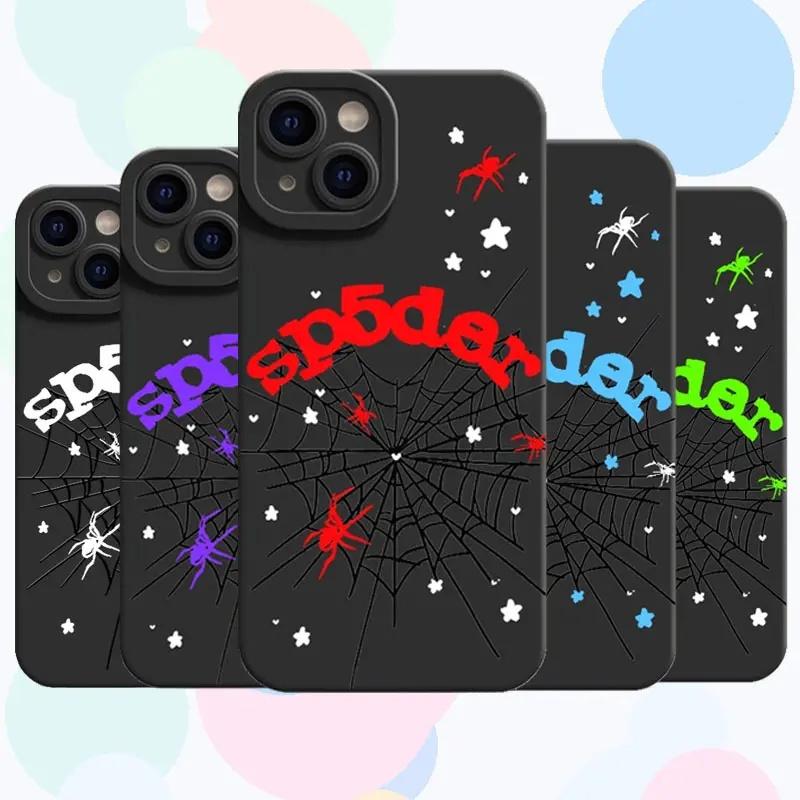
Begin with the central red-accented sample in the catalog composite. A black field carries a pale web, large curved red lettering, red spider forms and scattered small pale stars. Keep those visible details as the stable reference without assigning them a subculture, season, gender, mood or occasion.
02 — Wear one: record the strongest relationship, if there is one
After getting dressed normally, note the first relationship visible at arm’s length. It may be an echo, such as one red element elsewhere; a contrast, such as the black field against a much lighter outfit; or coexistence, where the case and clothes share no obvious cue. Record one sentence and stop. Do not restyle the outfit to make the entry look successful.
03 — Wear two: change the clothes, not the thesis
On another ordinary day, use the same red-accented case with a different outfit. Compare only what the eye can see: whether the large red lettering still leads, whether the web becomes more or less noticeable and whether another pattern competes with the small stars. The entry is about changing visual context, not proof that the case suits every wardrobe or occasion.
04 — Wear three: allow no match at all
The third entry can be uncoordinated. If no color, shape or spacing repeats, write that plainly. A useful accessory does not need to complete a styling formula every day, and a diary becomes more credible when it keeps a neutral outcome instead of manufacturing harmony.
05 — Read the three entries as a pattern, not a verdict
Place the three one-sentence notes together and look for what changed in the relationship between case and clothes—not for a winning outfit. The entries describe one reader’s visible context across three wears; they do not turn that record into a verdict about how the case will look or perform elsewhere.
Let the relationship change
Does a patterned phone case need to match every outfit? No. Across different wears, the case may echo one detail, contrast with the clothes or have no deliberate connection at all. Each result is useful to record.
How can I keep a three-wear phone-case diary? Use the same case with three outfits you already own. After each wear, write one sentence about the strongest visible relationship without changing the outfit to make the entry work.
What can a catalog image establish about the case? It can support observations about the visible lettering, web and smaller spider-and-star marks in the supplied view. It does not establish exact color, material, finish, fit, protection or how the case will look with every wardrobe.
Keep the neutral entry
Wear one. Dress normally, then name the strongest visible relationship in one sentence.
Wear two. Change the clothes and notice which case detail now leads or recedes.
Wear three. If nothing connects, write that plainly instead of manufacturing a match.
Image note: The current catalog composite is the only image in this diary. The central sample shows large curved red lettering, a pale web across the middle-lower area and smaller red spider forms and pale stars. Those visible details provide the fixed reference; the image does not establish exact color, material, finish, texture, fit, protection, durability or universal versatility.
Object observed: Spider Graphic Case catalog page